Latest discovery in the massive treasure chest that is the web:
Sita Sings the Blues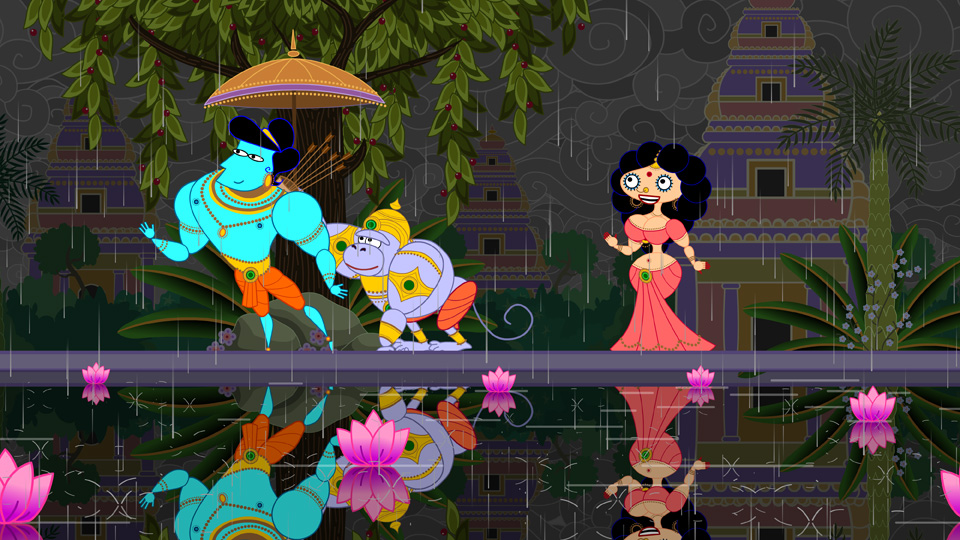
It's enchanting and it drew me in the first few minutes. I've always been a sucker for good-lookin' animation styles. And culture. And music. And I'm happy to know that it's been included in Roger Ebert's list of best films of 2009. You've got to see it to love it; and all you need is a little backstage trivia to completely fall in love.
Sita Sings the Blues is a retelling of the famous Indian epic Ramayana, and the subtitle is "The Greatest Break-Up Story Ever Told". It's a retelling that is sympathetic to Sita, Rama's wife, who suffered great heartbreak when her husband turned cold on her, and eventually shunned her.
Sita sings to the voice of Annette Hanshaw, a famous jazz singer from the 20's. Her voice is rich, and both strong and vulnerable. The lyrics to her songs are strikingly appropriate. They tell the same stories.
The film also has autobiographical bits: the heartbreak the animator, the brilliant Nina Paley, went through when her marriage disintegrated. Nothing is contrived, you know it comes from her heart (I read that animation is a kind of catharsis for Nina Paley.) It's her picking up the pieces and moving on. She showed her grief in the film, but implicit message of success of having moved on is the film itself.
I've nothing but admiration of any artist who is deeply passionate about her art. And it's never about the money. That's why Sita Sings the Blues is under a Creative Commons license, and
It's fascinating how Nina Paley seamlessly integrated different animation techniques, cultures and time periods and weaved them into a single thread. The film was not shy in invoking emotions, either; I've had my fair share of laughter at the three shadow-puppet commentators. The colors of the threads remain striking because they remain individuated. But the parallels running between these intertwining threads highlight the universal themes of separation, love, and heartbreak.
Sita Sings the Blues pulsate seamlessly into the realm of personal and the universal. Canonical works, after all, retain tenacity because anyone could relate to them, regardless of culture or era. :)
*will fix this review later*
Monday, December 28, 2009
Posted by abbibibibikinni at 7:14 AM
Subscribe to:
Post Comments (Atom)

0 comments:
Post a Comment